Concept
Concept
Prologue
A Memory of the Land
Yoshida is far too rich to be summed up in the single phrase "the home of tatara". Deep in the embrace of the Chūgoku Mountains, wrapped in mist and clear streams, it lives quietly as part of the mountain heart of Izumo. Following the upper reaches of the Hii river, one finds the memories of myth and iron layered upon one another.
Long ago, on the upper waters of this river, the deity Susanoo-no-Mikoto is said to have slain Yamata-no-Orochi. From the tail of the great serpent emerged what would later become one of the Three Sacred Treasures — the divine blade Kusanagi. The gleam of iron, inscribed in the memory of ancient Izumo and in mythology, is the original landscape of this land.
In later ages, the fires of "tatara" were lit in this mountain village. Iron sand and charcoal combined in a three-day, three-night smelting cycle to produce steel — a uniquely Japanese form of ironmaking. Sustained by iron-sand sluicing and forest cycles, tatara lived on as a craft for 1,400 years.
One of its centres was the Sugaya Tatara Sannai in Yoshida town. The only place in Japan that still preserves the Edo-period "takadono" structure, it is registered as a Nationally Important Tangible Folk Cultural Property and stands at the core of the Japan Heritage "Izumo Tatara Fudoki". Under the master-smith known as "murage", the area governed by the Tabe iron-master family was at its peak home to over ten thousand people, producing iron sand, burning charcoal and forging iron — a true company-town of iron and flame.
Yet at the end of the Taishō era, with the spread of Western steel, the tatara fire quietly completed its role. A technique that had lasted 1,400 years gave up its place as the mainstream in just a few decades. Even so, the mountains and forests, the rivers and the rhythms of daily life, remained here intact. This place was later named as one of the inspirations for the tatara settlement in Studio Ghibli's "Princess Mononoke", and what seemed to have been lost has been quietly passed on into a contemporary tale.
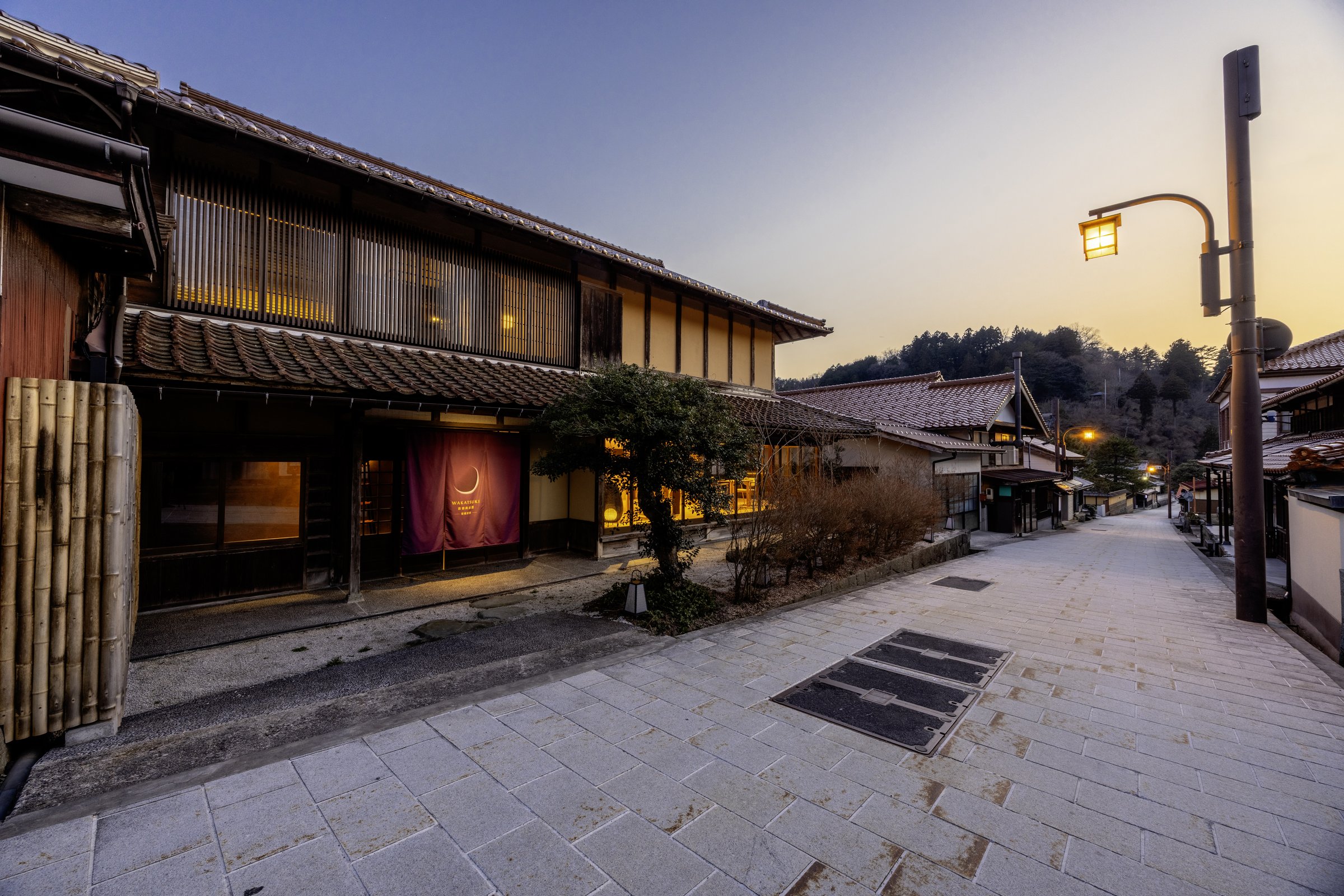
It is into a 150-year-old former village headman's residence — alive with such memories of myth and iron — that Wakatsuki Yoshida Okuizumo settles.
Here, Wakatsuki is an archive of the memories that Yoshida has woven. Every moment touched at the inn or in our restaurant overlaps with the history and climate of this land.
To spend time here is not merely to stay overnight. It is the beginning of an adult's journey — one in which the memory of the land is read with all five senses.
Our Context
The House, This Land Wakatsuki Yoshida Okuizumo
Our Context
The House, This Land Wakatsuki Yoshida Okuizumo
The name "Wakatsuki" is taken from "Wakatsukiya", an old establishment that had long operated in Yoshida. We have inherited its name together with the history and intent of the tourism inn run by Iron History Village Inc., a company once funded jointly by the local community.
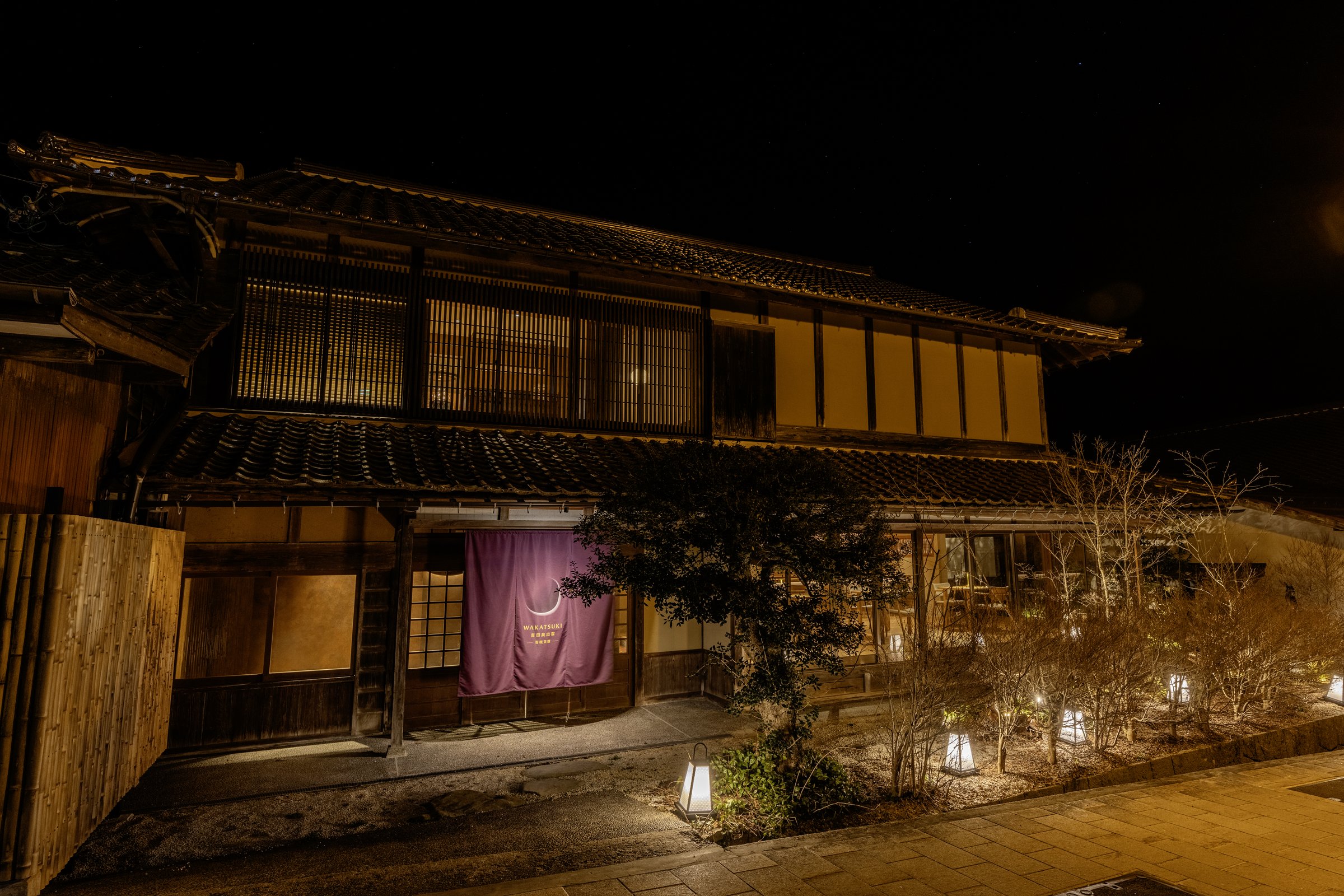
The setting is a 150-year-old former village headman's residence. Standing at the heart of the company-town once governed by the Tabe iron-master family, it is a house that has quietly held the memory of its era.
Into this space, we have inscribed motifs from tatara ironmaking, Izumo magatama beads, and the aesthetic of "In'ei Raisan" — "In Praise of Shadows". The lighting is lowered; between the old beams and shōji paper screens, light and shadow speak gently to one another.
Ingredients come from the producers of this region. The rice and vegetables of the mountain villages of Unnan and Okuizumo, and seafood from the Sea of Japan. The care of the house is shared with local craftspeople. Behind every dish, and behind every pillar, are the hands that have tended this land — it is in this way that Wakatsuki is woven, piece by piece.
Returning light to this house is, we believe, part of passing the time of this land on to the next hundred years.